brut accessible describes brut Wien’s approach and commitment to questioning and breaking down barriers and exclusion in the context of performance. The aim is to shape the way we think, plan, curate and produce in such a way that people with disabilities can participate on equal terms.

Through brut accessible, we offer artistic projects, workshops, get-togethers, relaxed events, audio descriptions, tactile tours, sign language interpreting and much more for specific communities. In this way, we continue to expand our programme for neurodivergent and autistic audiences, blind and visually impaired visitors, as well as for deaf audiences and people with hearing impairments. These formats are developed in collaboration with experts and advisers who have lived experience, as well as with the artists themselves, and draw on diverse approaches from the Aesthetics of Access.

We recognise that accessibility must always be taken a step further and requires intersectional perspectives.
Do you have any questions or suggestions regarding accessibility at brut Wien?
If so, please feel free to contact us directly at barrierefreiheit@brut-wien.at or call us on +43 1 587 8774.

Looking forward to getting to know you!
Katrin Brehm & Hanna Steinmair (Dramaturgy & Outreach)

More about our accessibility OFFERS

In a rehearsal room, a group of participants move together. At the centre, a person wearing a white T-shirt with the words “Run to a magical place”, pink trousers and black trainers stands with legs wide apart and arms stretched out. Behind them, another person in a white shirt also extends their arms. Other participants are visible around them, partly cropped or blurred. The scene feels like a guided group movement exercise.
Theresa Scheinecker / Ray & Katharina Senk / Senki – Move to the Beat – Stay for the Pasta (2024/25)
© Christine Miess
Several people bend forward in a rehearsal room as part of a shared movement exercise. At the centre, a person in a white T-shirt and beige track pants rests their hands on their thighs, lifts their head and smiles upwards. Around them, other participants are in similar positions, some blurred in the foreground. The close framing feels lively and shows a focused yet playful moment in the workshop.
Theresa Scheinecker / Ray & Katharina Senk / Senki – Move to the Beat – Stay for the Pasta (2024/25)
© Christine Miess
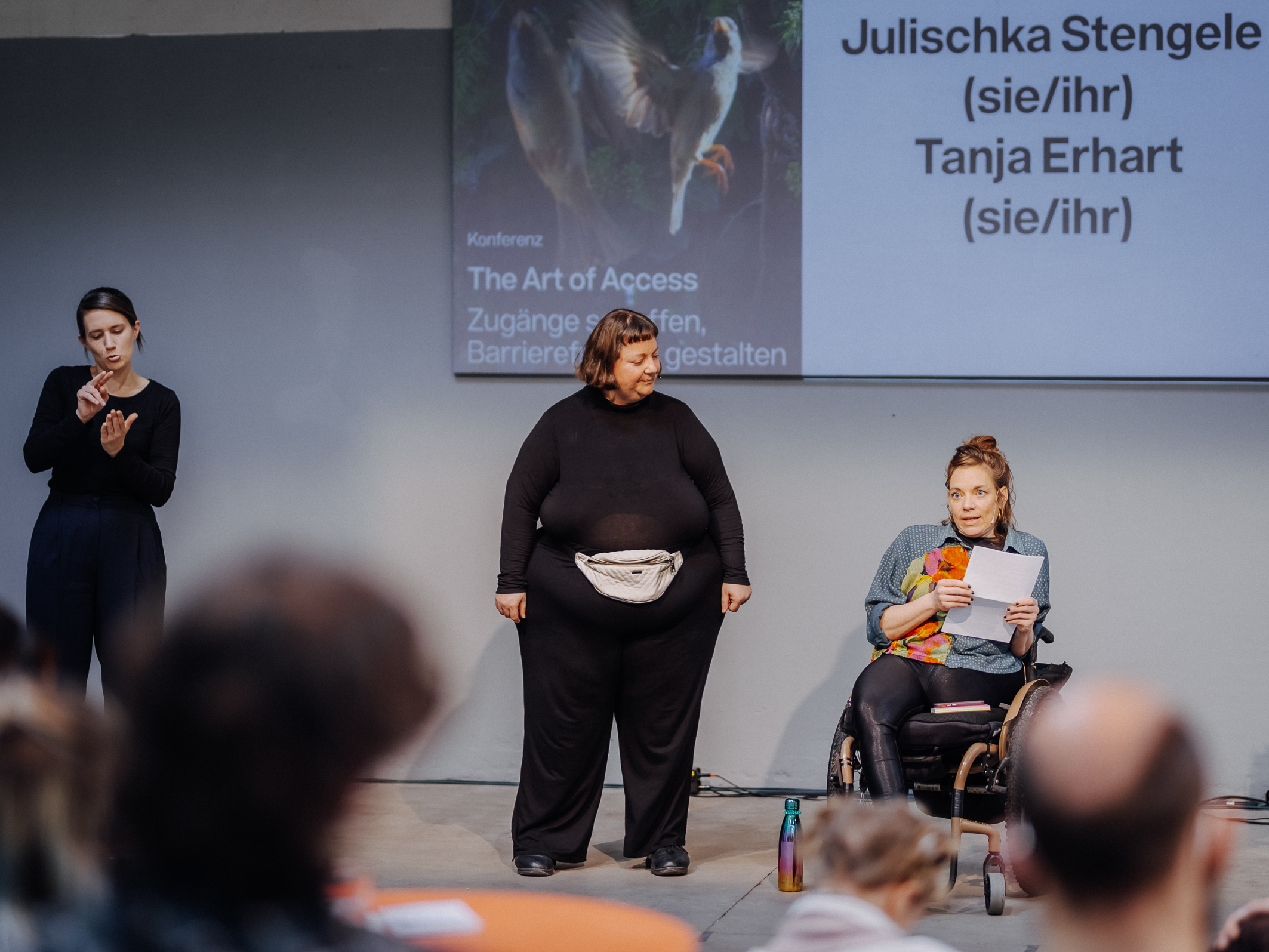
A conference setting in a bright event space. Three people are positioned at the front in front of a large projection screen, with the audience visible out of focus in the foreground. On the left, a person dressed in black interprets in sign language. In the centre, a person in black clothing stands facing the audience, wearing a light-coloured waist bag. On the right, a person sits in a wheelchair, holding notes and speaking into a headset microphone. Behind them, the screen shows the names “Julischka Stengele (sie/ihr)” and “Tanja Erhart (sie/ihr)” as well as a poster reading “The Art of Access” and “Zugänge schaffen, Barrieren gestalten”. The image documents an accessible conference or discussion format with sign language interpretation and visible accessibility context.
Konferenz The Art of Access: Creating access, Shaping accessibility by and with Tanja Erhart (on the right side in the picture) & Julischka Stengele (in the middle of the picture), Pam Eden, Eva Egermann & Cordula Thym, Katharina „Senki“ Senk, Liv Schellander, Noa Winter (imagetanz 2024)
© Christine Miess
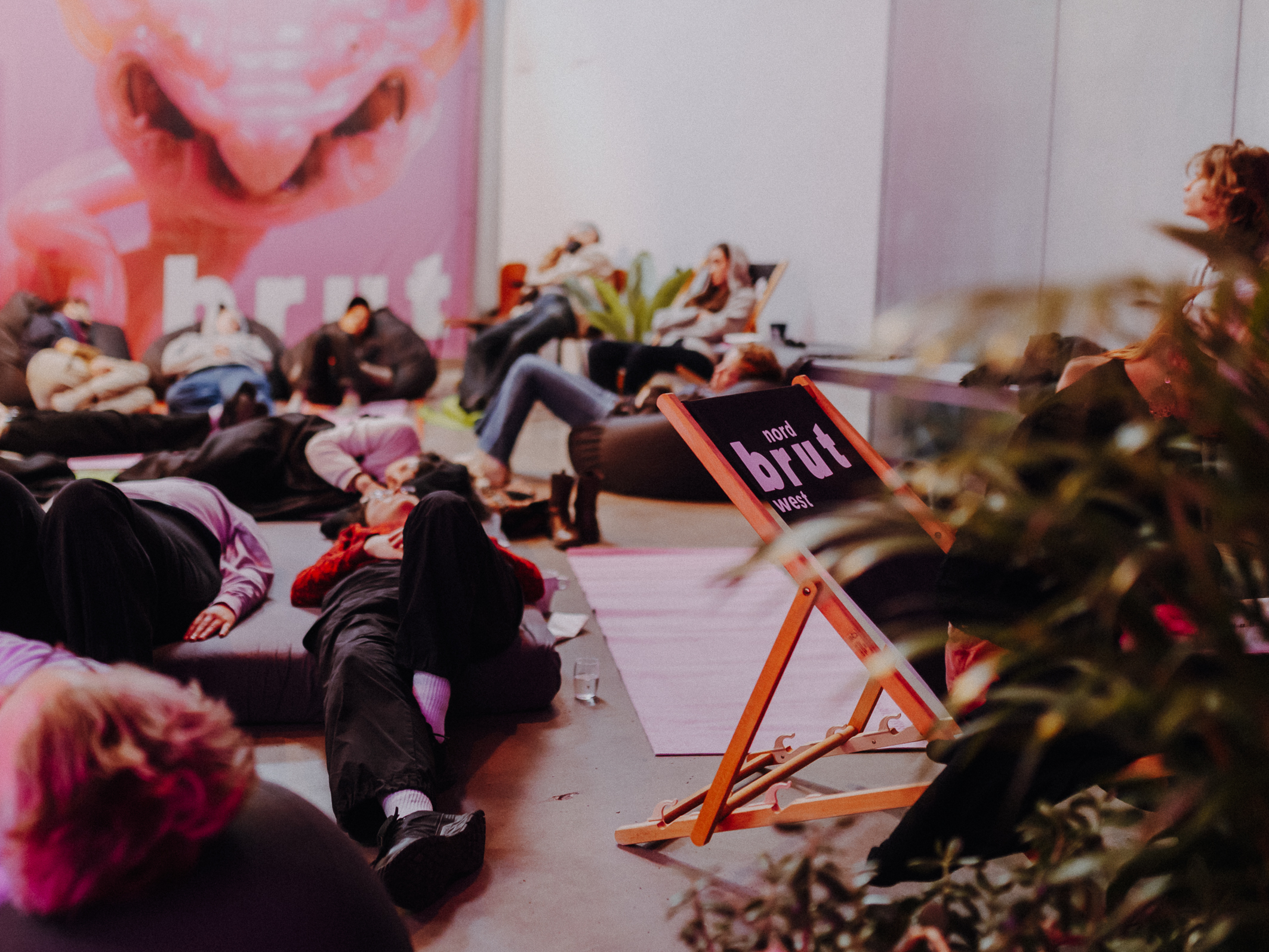
A bright room at brut nordwest with pink and white design elements. Several people lie relaxed on mats, beanbags and blankets on the floor. In the foreground, there is a wooden deckchair with black fabric and the “brut nord west” logo. Blurred plants appear on the right side of the image. In the background, a large pink brut poster shows an enlarged flamingo or swan motif. The scene feels calm, soft and focused on rest or sensory regulation.
Workshop Resting and quitting as a resistant practice by Angela Alves (imagetanz 2025)
© Christine Miess
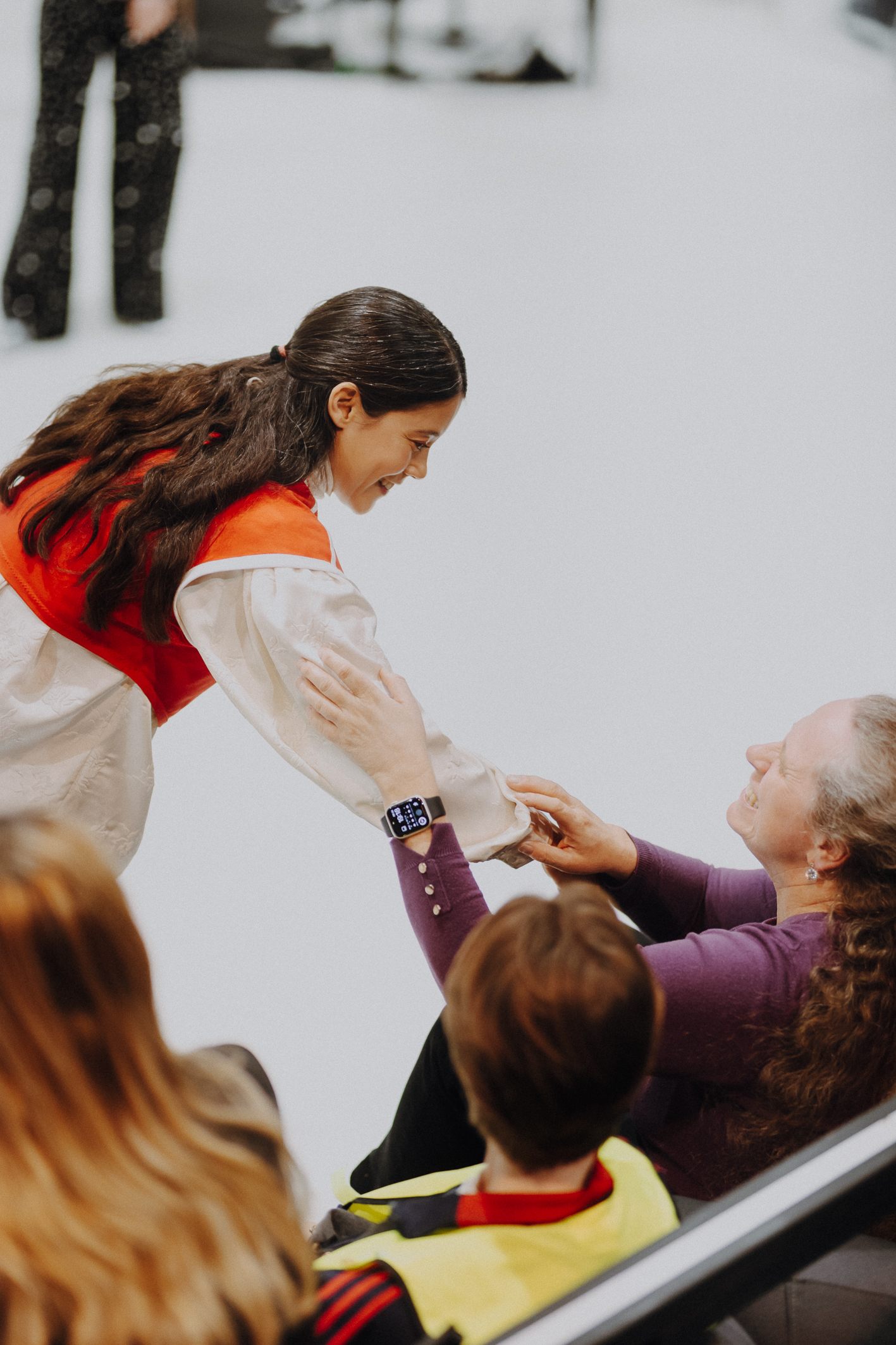
A person in a red and white costume leans down smiling towards a seated person touching their arm and costume. Other people sit in the foreground.
Touch tourfor BUZZ by tanz.sucht.theater (imagetanz 2026)
© Christine Miess
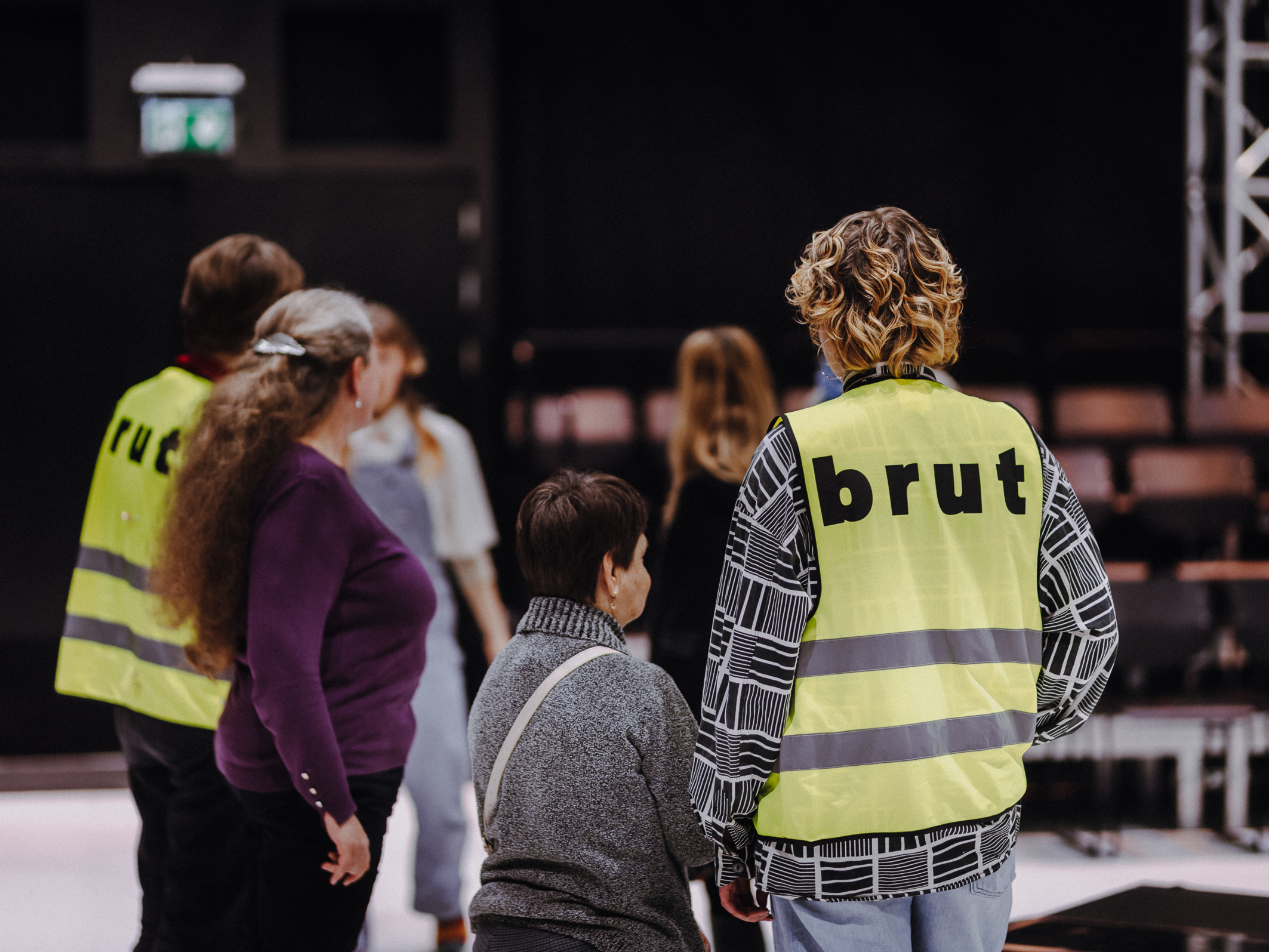
Several people stand in a performance space. Two people wear yellow brut safety vests and accompany the group through the room.
Access Friends in yellow brut vests
© Christine Miess
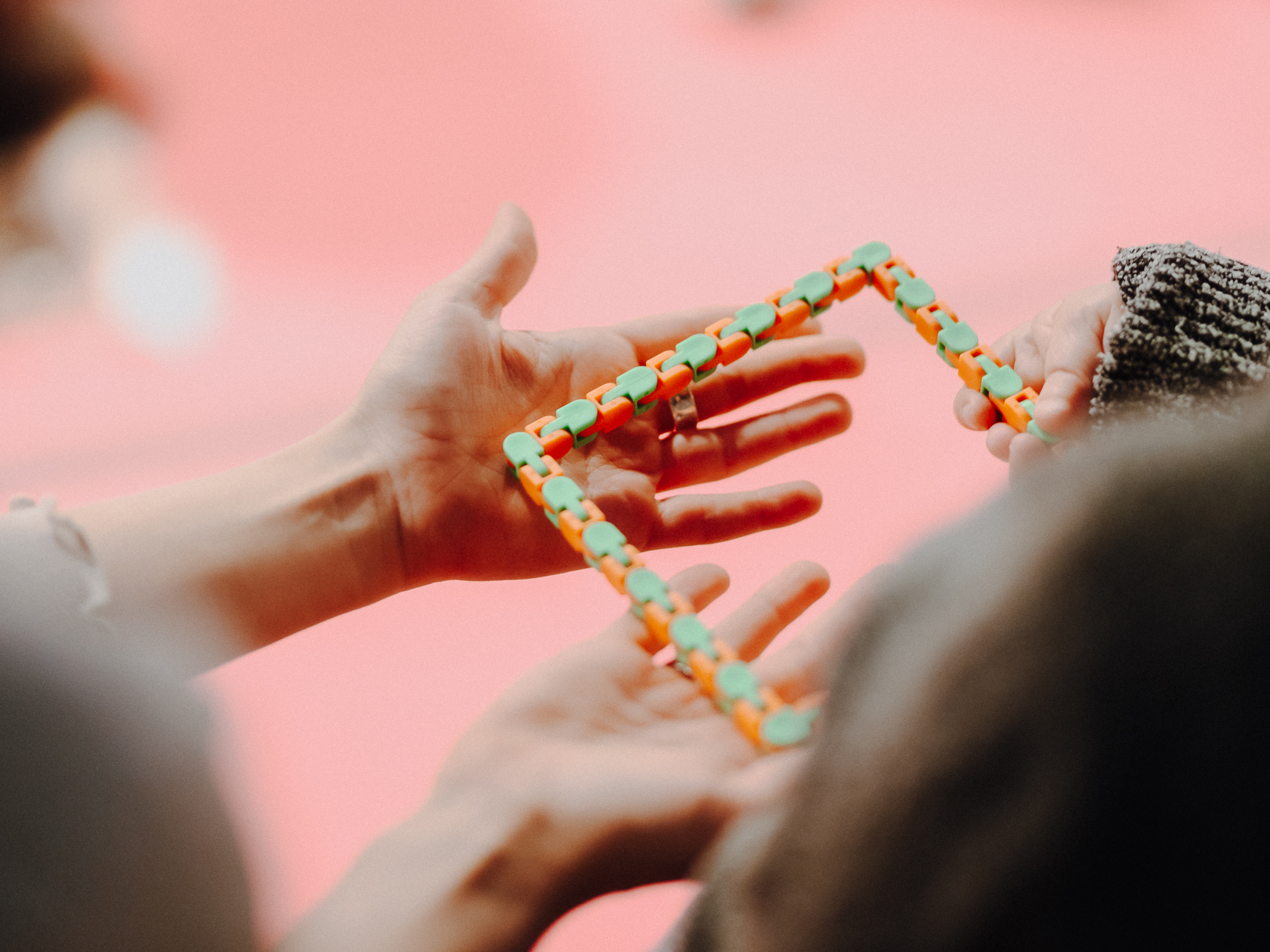
Close-up of hands holding a flexible orange and green sensory toy against a pink background.
Stim toys
© Christine Miess
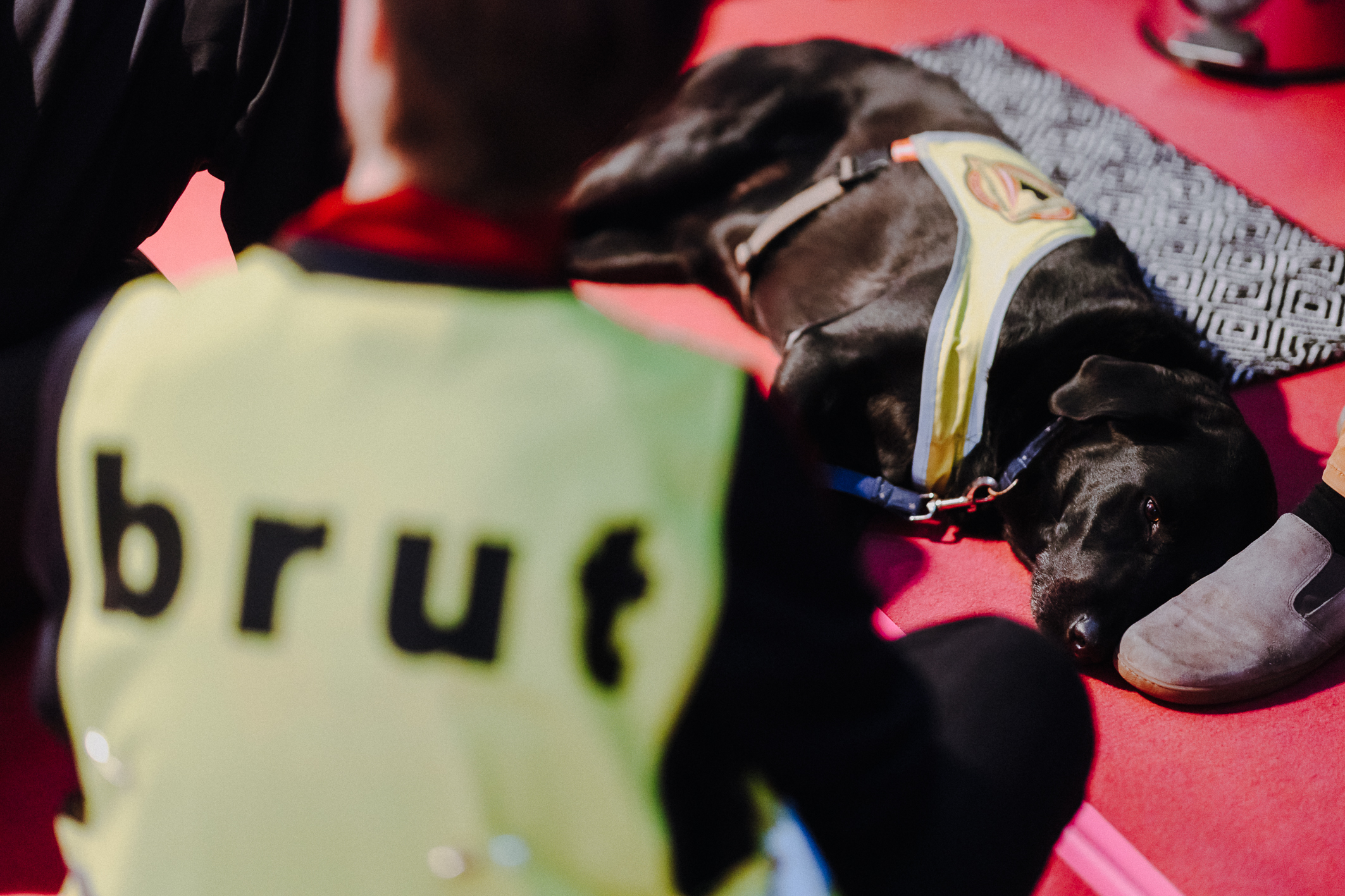
A black assistance dog lies on a red floor between several people. A yellow brut vest is blurred in the foreground.
Assistance dog and Access Friend at the for neurodivergent, blind and visually impaired audiences hosted by Elena Lach & Ema Benčíková (imagetanz 2026)
© Christine Miess
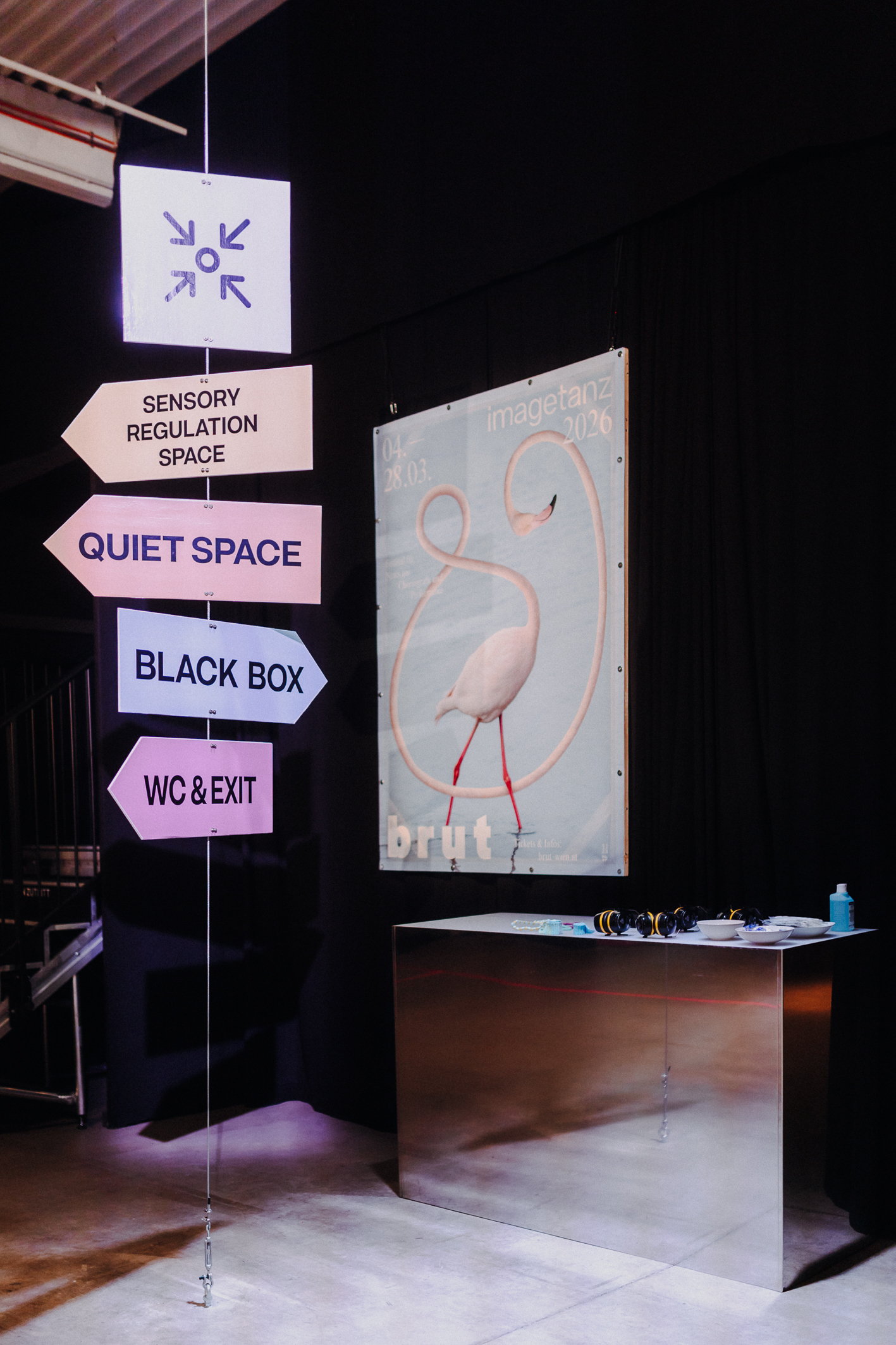
igns reading “Sensory Regulation Space”, “Quiet Space”, “Black Box” and “WC & Exit” hang next to an imagetanz 2026 poster and a table with headphones and materials.
Wayfinding System During imagetanz 2026
© Christine Miess
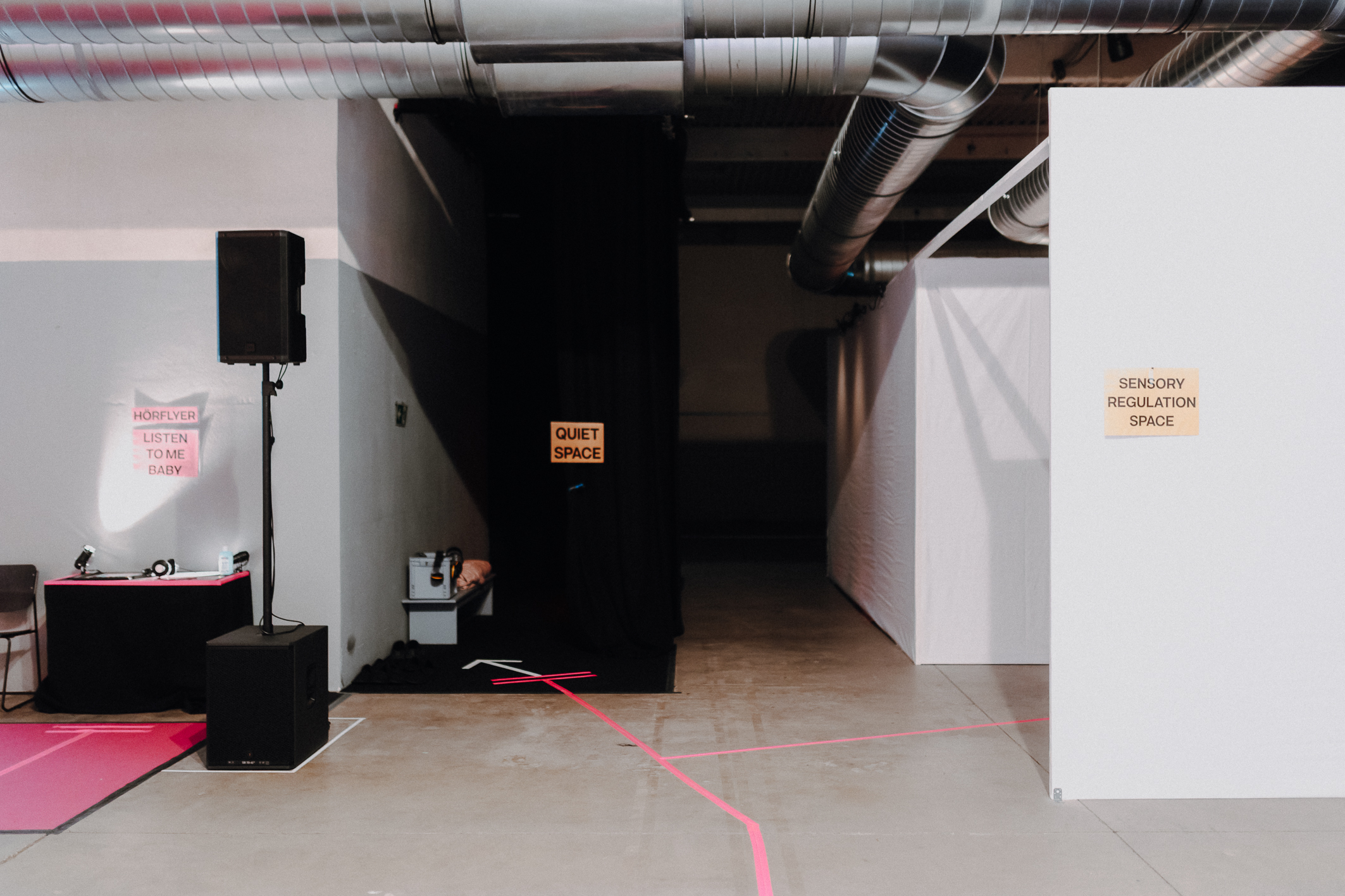
Interior space with marked paths on the floor, a loudspeaker and signs for “Hörflyer”, “Quiet Space” and “Sensory Regulation Space”.
Audio Flyer Station and Venue Availability During imagetanz 2026
© Christine Miess
‘Not just because it’s nice and exciting, creates new and innovative things, and on various levels enriches processes in art and society at large, but also because uninhibited access on all levels is a basic right of disabled, chronically ill, crip, neurodivergent, deaf, hearing-impaired, blind, and visually impaired people.’
Tanja Erhart und Julischka Stengele at the conference The Art of Access at brut Wien in 2024

Programm

Back to top