

Magazine
Bodies, Water, Resistance
Amanda Piña in conversation with brut dramaturge Hanna Steinmair about her work Ancient Future Climate Bodies
‘I am inspired by the possibility of disrupting the narratives that allow the extraction and depletion of what the West calls “natural resources”, which is at the core of what we call Climate Change.’
Source
Links
Artists
Amanda Piña
Amanda Piña ist eine in Wien lebende österreichische Künstlerin mit mexikanischer und chilenischer Herkunft. Ihre choreografische Praxis umfasst Performance, Musik, Video und Skulptur und untersucht Kosmopolitik sowie Beziehungen zwischen unseren Körpern und anderen Körpern, wie beispielsweise Gewässern, der Erde, Tieren und Pflanzen. Ihre in indigenen Wissenssystemen verankerte Arbeit wurde international u. a. im mumok, in der Fondation Cartier, im deSingel, im Museo del Chopo und im GAM Santiago gezeigt. 2024 war sie Valeska-Gert-Gastprofessorin für Choreografie an der Freien Universität Berlin.







Interview
What inspired / gave you the impetus for the topic?
I am inspired by the possibility of disrupting the narratives that allow the extraction and depletion of what the West calls ‘natural resources’, which is at the core of what we call Climate Change.
For more than ten years, I have been working on issues of Extractivism and Climate Change. What ignited this interest was a personal experience: my place of origin in the central Andes of Chile was being threatened by a mining company, Anglo American. They were polluting the water, and my mother had health issues related to mining toxicity in the water she drank. The experience of real threat, pollution, and possible eviction of my mother’s community brought me to look at water in a different way.
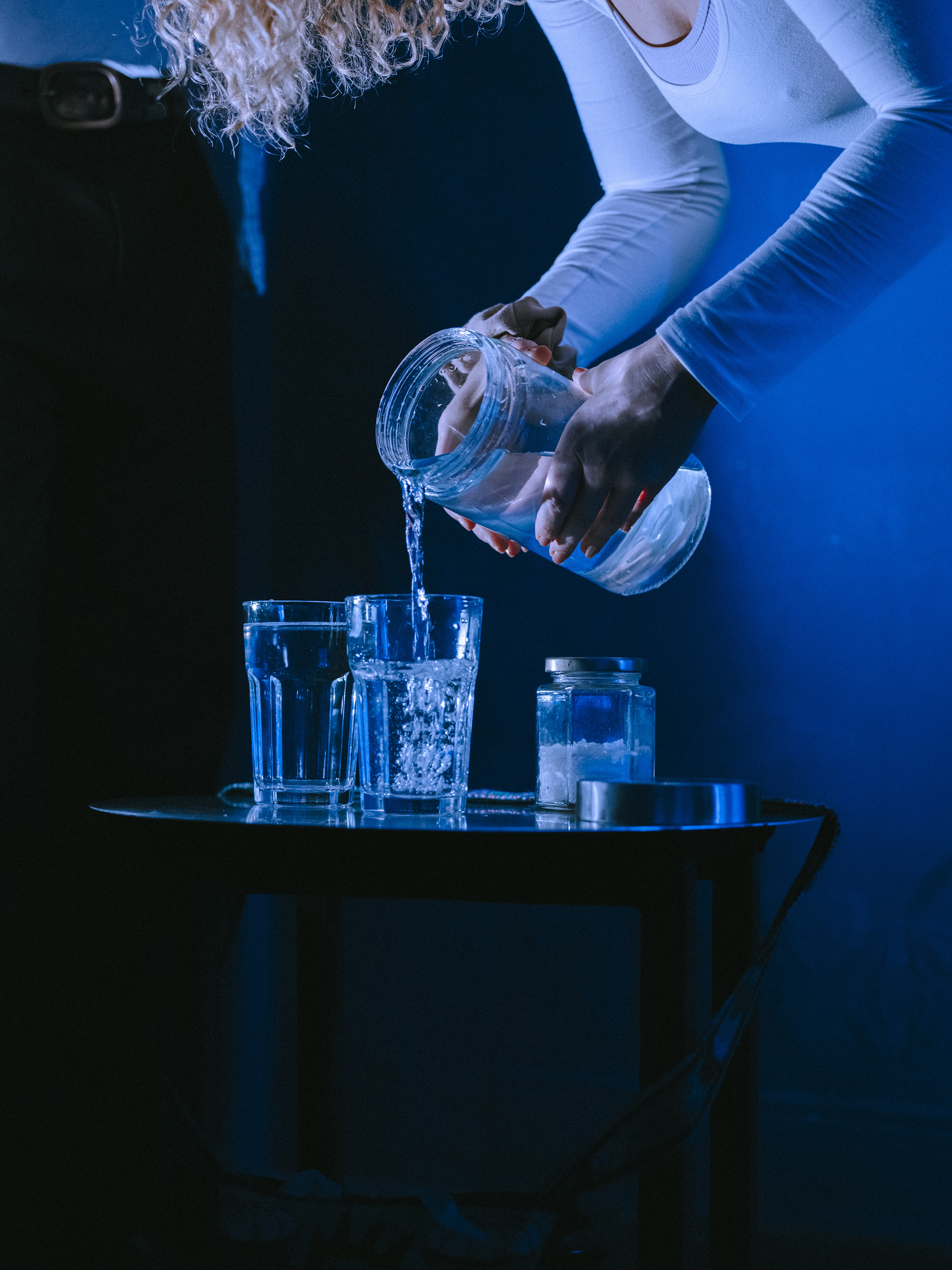
Water in western-naturalist ontologies is considered a thing, stuff, a resource, H₂O, etc. The mining company used a language that enabled what was happening to my mother by referring to water as a resource, rather than as what sustained the life of my mother and her community. I understood that western-naturalist language and ontology was enabling mining extraction in my community of origin.
I started researching more-than-western and more-than-naturalist forms of understanding water, and came into contact with different traditions of thought and practice still present in Abya Yala, such as Afro-diasporic, Afro-Brazilian, Afro-Mexican, Mexica, Maya, Mapuche, and Aymara traditions.
I am interested in creating bridges between these forms of understanding water and other elements and current research on Climate Change, to create new ancient-future mythologies that can make this crisis be felt in the body.
Would you like to tell us about the history of your piece?
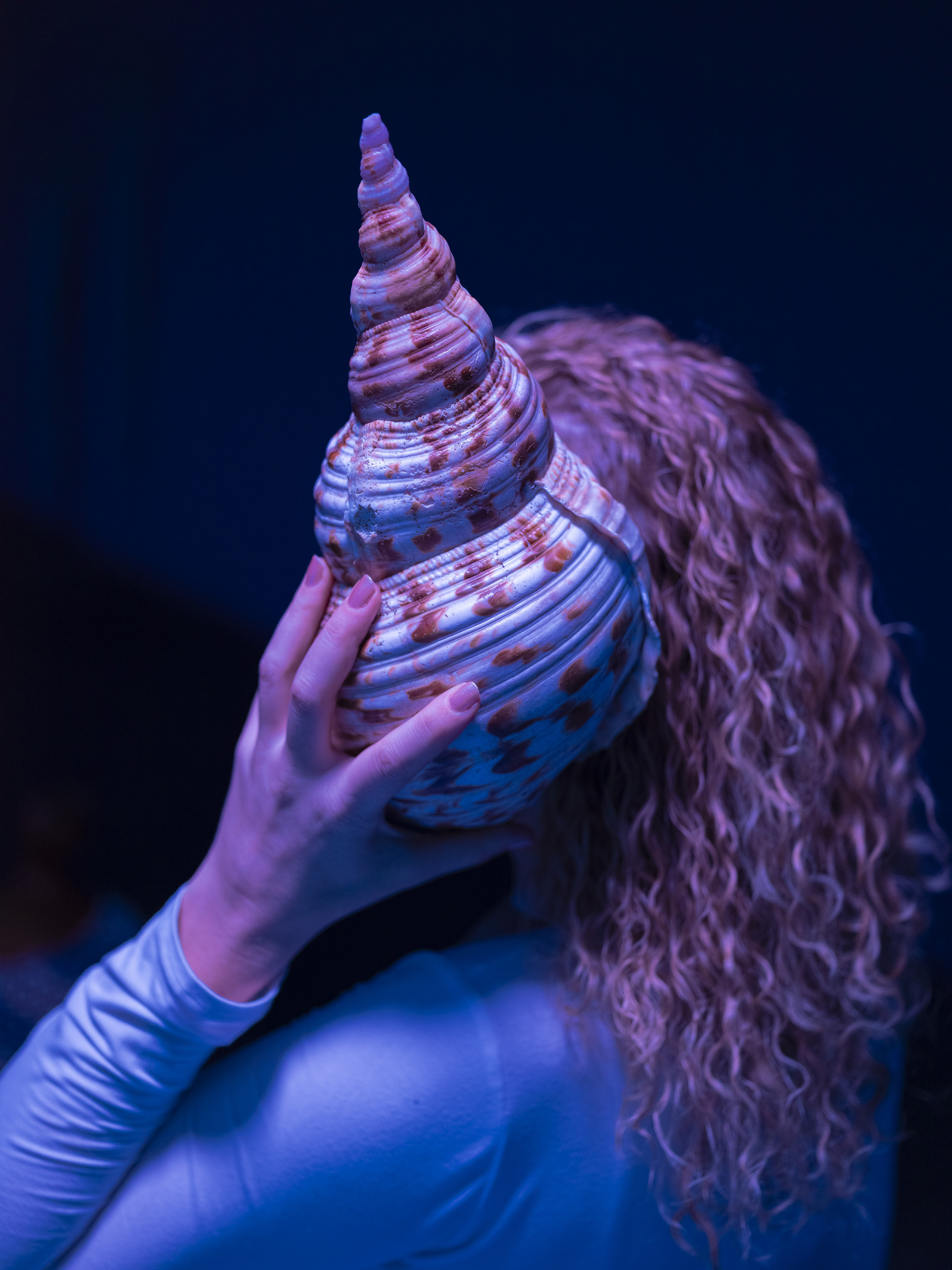
Yemanja, also known as Yemayá in the Spanish-speaking realm, is the protagonist of this work. She is a Yoruba entity of the ocean who crossed the Atlantic in the belly of a ship, carried by enslaved people taken by force from West Africa to the American continent by European colonisers. In the Americas, their forced labour fed European capital accumulation through the expansion of monocultural plantations. In the Americas she became a symbol of anti-colonial resistance.
I’m interested in Yemayá because I have been researching the actual state of the oceans and have created several works in relation to it. She is an ancestor ocean. How would our relation to the ocean be different if we would understand it as an ancestor?
‘How would our relation to the ocean be different if we would understand it as an ancestor?’
What further questions / topics did working on the piece bring you to? What would you like to work on further?
I would like to continue creating ancient-future mythologies as alternative narratives to understand the present moment.
I would like to continue making the crisis be felt in the body and understood through other means and other narratives. As I said I would like to continue working on the possibility of disrupting the narratives that create this destruction.
I would also like to deepen my apprenticeship into weaving and research on other entities of water like the Mayan Ixchel. One of my names, you know Latinxs have usually several names, is Xcaret, a Mayan toponymic, a place which was historically related to the cult of Ixchel in the Cozumel Isle Ixchel is an entity of water, a very ancient one, and she is also a weaver!
How were your materials / stage design created?
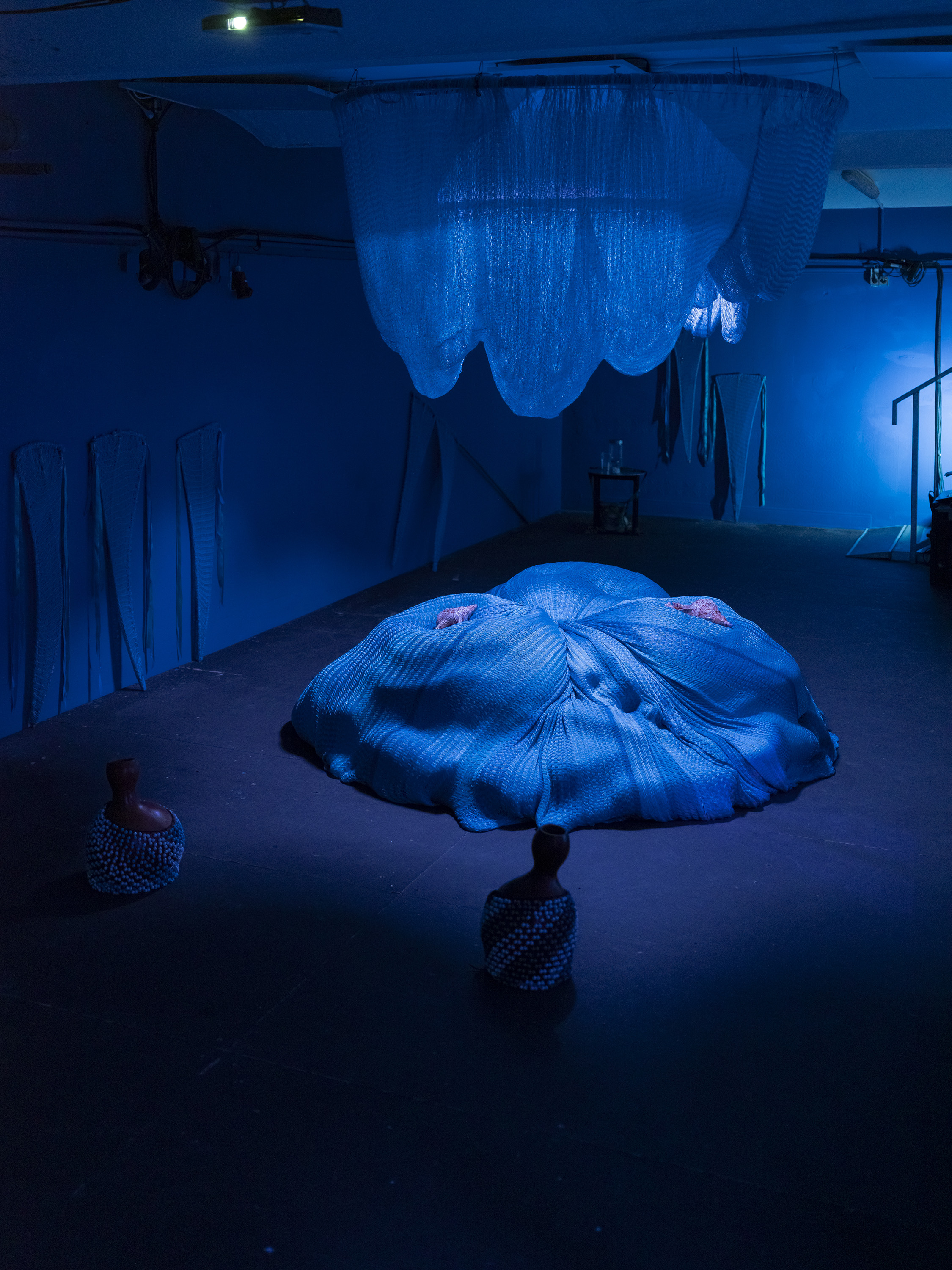
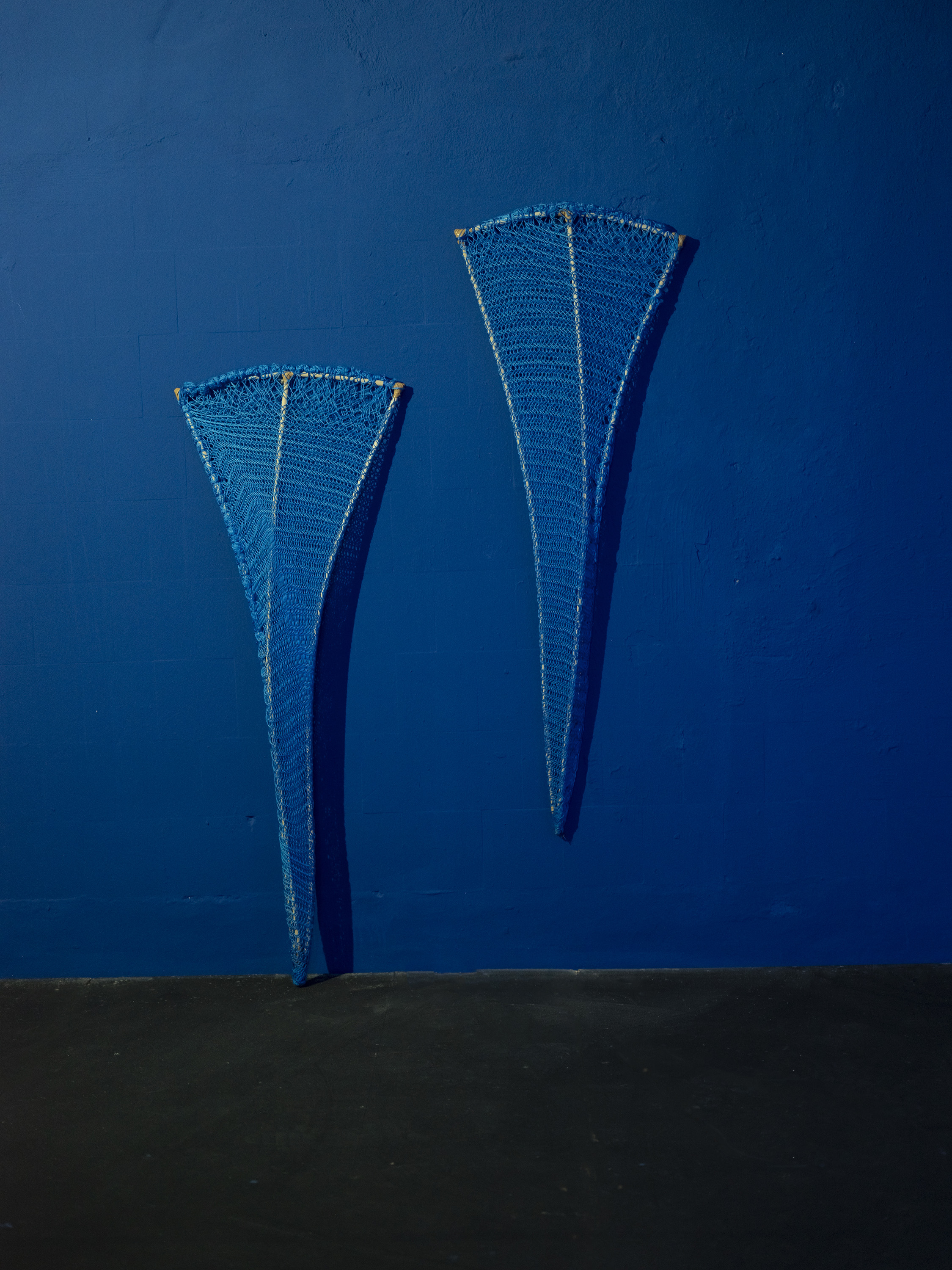
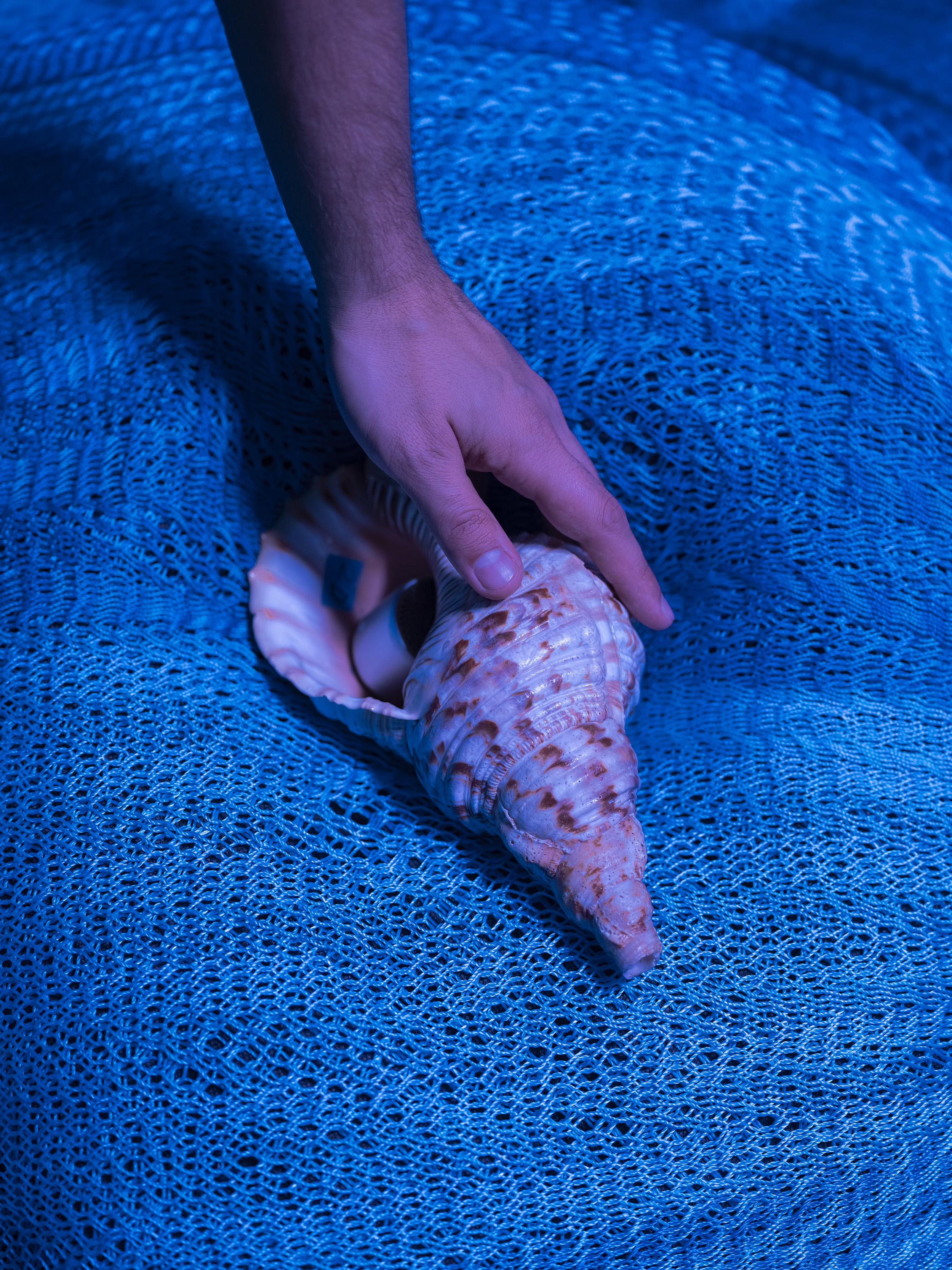
Since some years I create pieces with hand woven nets. They are done in a tradition that originated in the Caribbean, by Mayan weavers in the Yucatan peninsula, where I have extended family. These nets were done to sleep and rest on and in the visits to my family as a child I used to sleep in them inside the palm house of my ‘madrina’ and be fascinated by their texture and movement. The weaving pattern of these nets in the installation is called ‘water’.
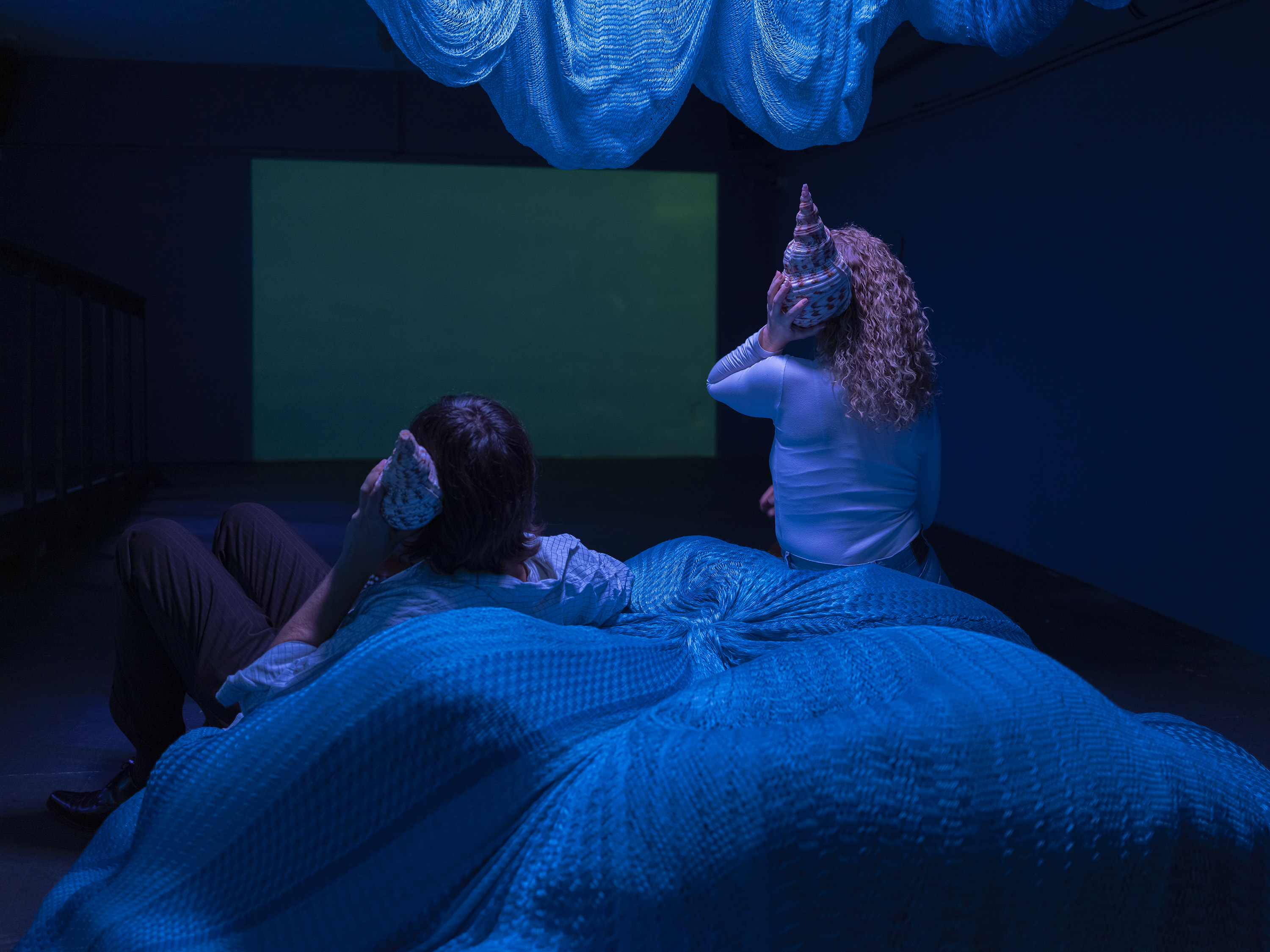
I always wanted to work with that materiality and learn how to weave. These hand-woven nets are a vivid material metaphor of how I understand life’s interdependence. It is a very malleable and very sculptural material yet if you pull one thread the whole structure changes. It works on tensegrity, keeping its integrity through tension; we have created performative sculptures with them and sculptural objects which travel to art exhibitions and biennials. They also host performances. In the film there is one in a lila colour, that one is made of six bodies moving together.
The other material present in the installation is rattan, a climbing palm native to Southeast Asia which travelled to the Americas with the colonial trade. Rattan was also used to discipline the bodies of the enslaved in the plantation system, small canes were used as punishment sticks. In the installation I wanted to re-signify this material and make it encounter the net which in turn speaks of resting, of care, of a resistance to the imperative of productivity in the colonial regime. A form of Chrono-resistance.
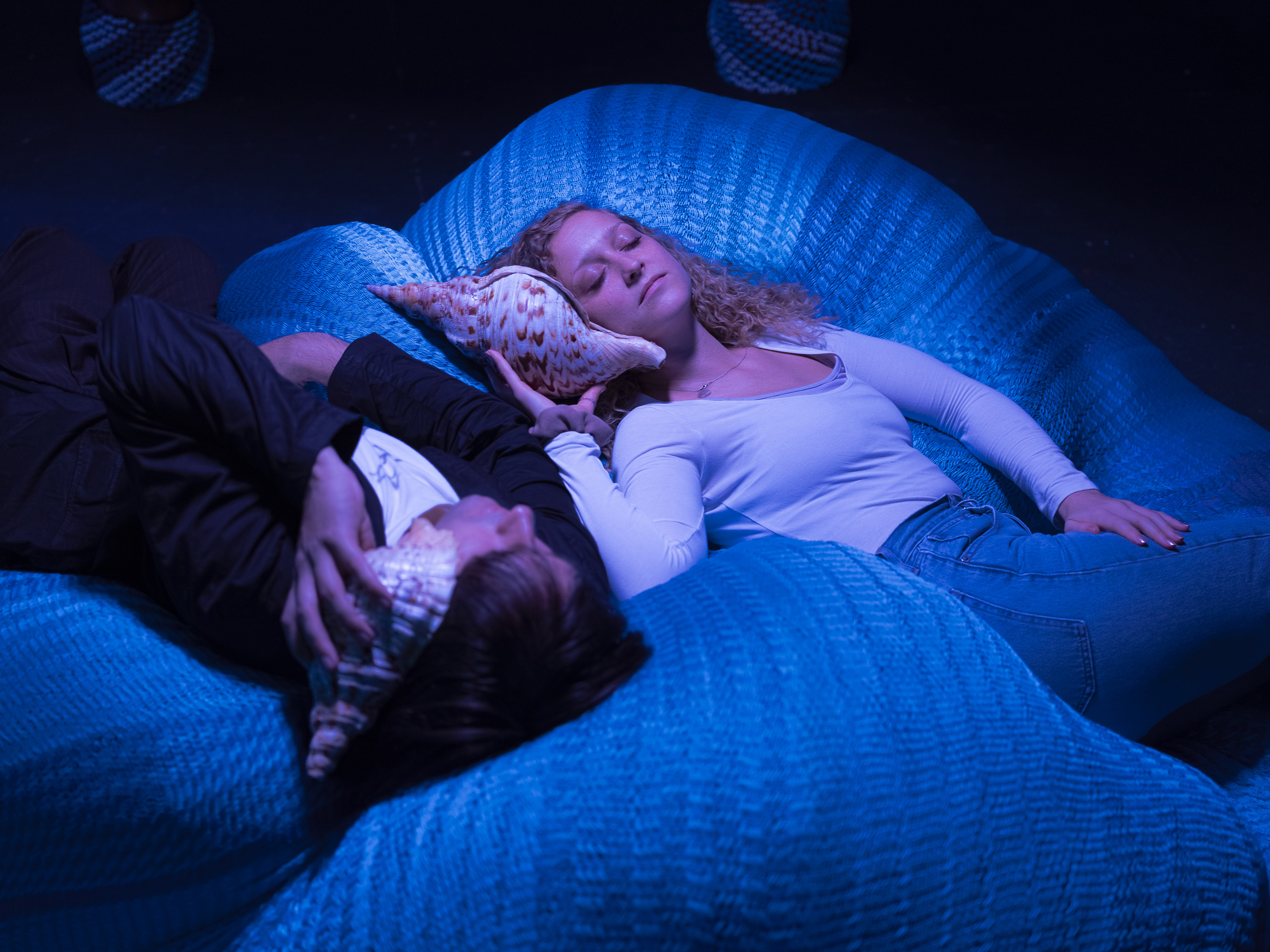
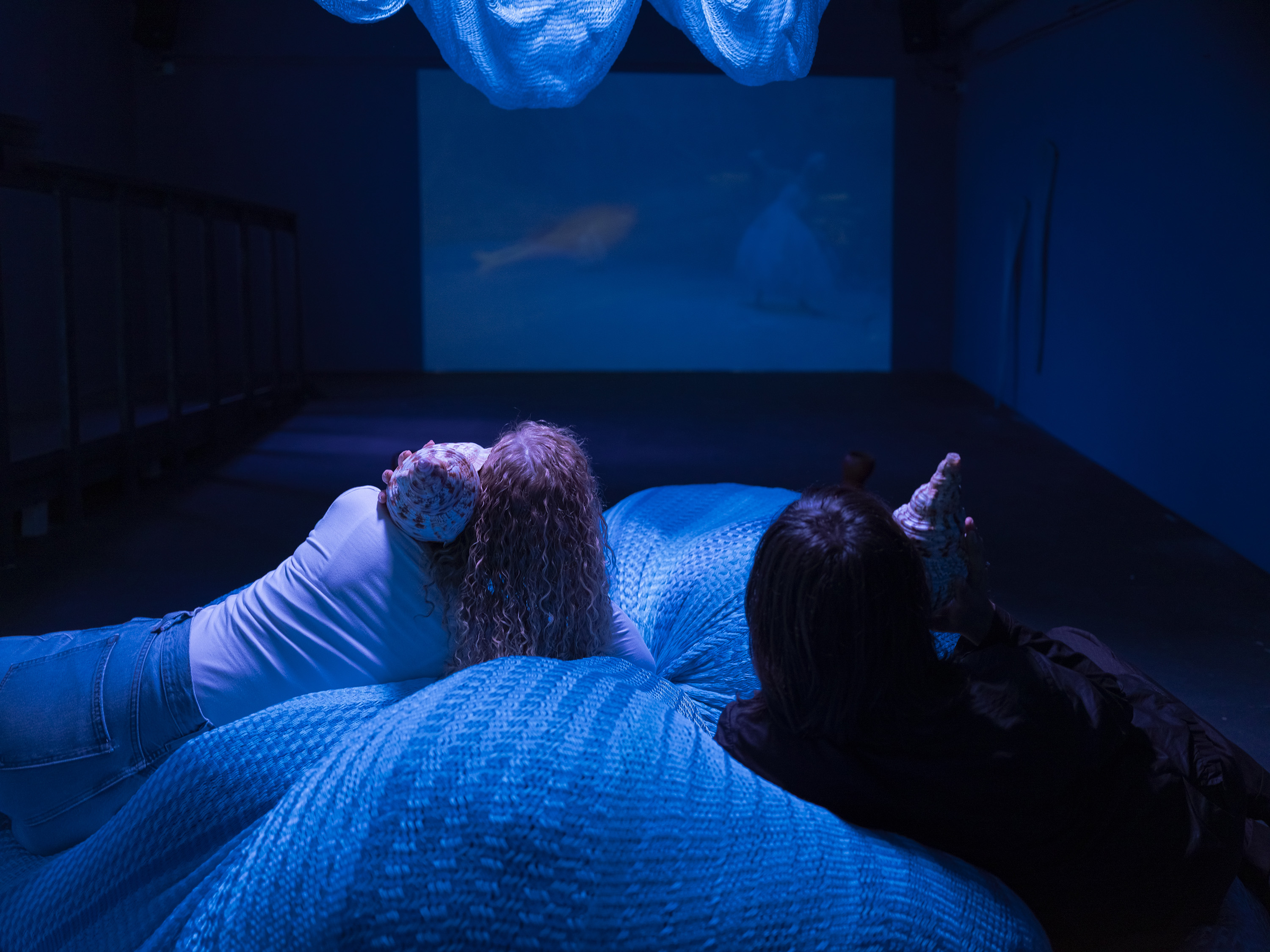
For Ancient Future Climate Bodies, I worked with my team, and with the team of brut to create parts of this sculptural setting, like the soft sculpture one lies on during the piece. It was fun to do, also sometimes exhausting, yet I am very happy with the result.
Do you have one or more favourite / most challenging moment(s)? Why this one / these ones?
It was very challenging to create this work because sometimes the creative process is surprising and unpredictable. I wanted to be able to do a performative installation, yet it became a challenge to understand its requirements and to make all elements co-exist in a way that would allow an immersive experience.
To work with the brut team was a bliss. They are into art; one can feel a passion for artistic processes and that is what such an institution really needs. The technical team is great in this sense. Very much into details and into finding solutions to what arrives during the creative process. That feels very good. To make art is not easy. Art is a process, is not lineal, like a river it flows into curves. To make it straight damages its potential. Art is curvy!
‘Art is curvy!’
What are you currently reading?
A book by Jacobo Grinberg called El Doble (The Double). It is about consciousness and perception, a bridge between Western Science and Mexican Shamanism.
Do you have a ritual?
I have many!
Amanda Piña highlights the following initiative:


