

Magazine
What kind of world are we trying to build?
Sunggu Hong in conversation with brut dramaturge Katrin Brehm about the work Raised by the Chronic; Beyond, the Moth
„We design these systems and constantly try to make them fit into the world we have created. We are raising them. But what is important is that they are also raising us.“
Artists
Sunggu Hong
Sunggu Hong, born in Seoul, is a Vienna-based artist working in visual and performing arts. He studied performative art at the Academy of Fine Arts Vienna. ‘Relation’ forms a central concept in his artistic practice. Starting from this, he asks how we can or should live together within interdependent, entangled, and complex relationships, and why exclusion and hatred emerge within these complex relations.




Interview
Dear Sunggu, could you tell us a little about yourself and where you’re coming from artistically? How did your path lead you to brut?
Actually, I’m still asking myself how I came to performance. I originally studied visual arts, starting with painting, and I’m quite a shy person who isn’t particularly good at talking to people. But I think there is something about performance that attracts me and makes me want to know more about it. Since I’ve been living in Vienna, I’ve often visited brut to see different performances. I thought that perhaps brut could be another path for me to continue exploring my own artistic practice. It’s difficult for me to name exactly what I’m doing. Painting, installation, stage, theatre, dance, performance ... And then, thankfully, I had the opportunity to be part of the mentoring programme Huggy Bears.
‘I would like to try to reinterpret our coexistence in the context of the world we live in today.’
In Raised by the Chronic; Beyond, the Moth, you explore the idea of being together – not only in relation to other people, but also to objects, machines, and other non-human actors. What draws you to this question?
I would like to try to reinterpret our coexistence in the context of the world we live in today. Drawing on Donna Haraway's thinking about how the ‘Other’ has been made to function as a mirror of the ‘Self’ in Western traditions of domination, I try to look again at humans ourselves and the ways we live through our relationships with non-human beings. We sometimes get angry at ChatGPT when they don't understand what we say and give us strange answers. We design these systems and constantly try to make them fit into the world we have created. We are raising them. But what is important is that they are also raising us. They teach us the knowledge and perspectives we ourselves have created, and they may reproduce the world we have built. If so, perhaps we may need to ask what kind of world we have been building, and what kind of world we are trying to create now.
Ludwig van Beethoven’s Symphony No. 9 is an important reference in your performance. You once heard the symphony at a train station in Seoul. Could you tell us more about that moment? What did the experience trigger in you?
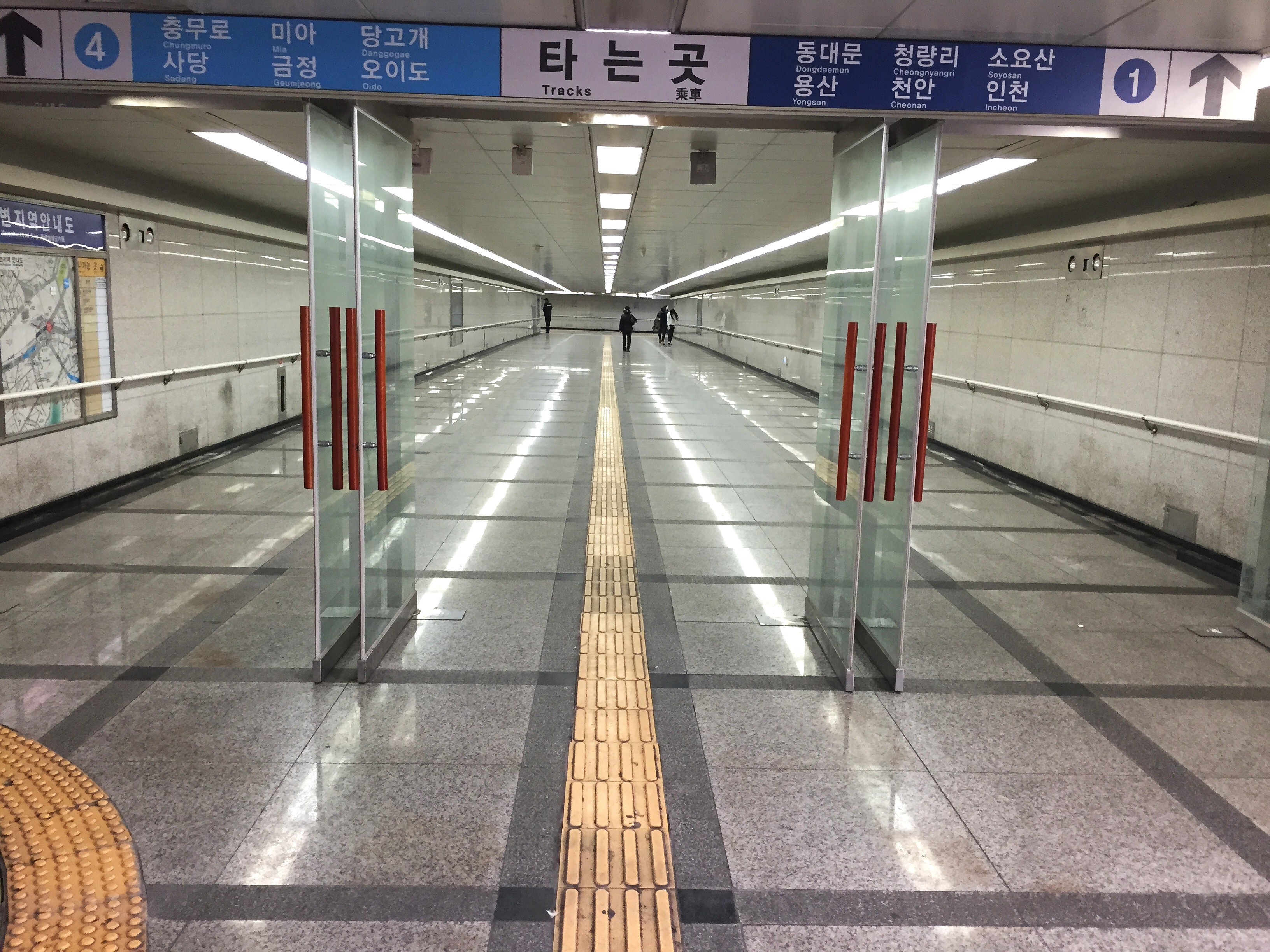
In Korea, I spent more time at Seoul Station than in my studio at the university. Since I'm talking about our world, I felt that I needed to experience our world with my own body. There were many homeless people. It felt very strange: everything I had been told and taught was different from what I saw there. It felt as if the world was telling me that we don't want everyone to be happy. I met many people there. Together, we talked about our lives, our world and a better world. While listening to this music there, I often asked myself why we were all living such different lives, a question I’m still asking myself ten years later. Of course, it requires a complex perspective to approach this situation.
The symphony is closely associated with ideas of joy, community, and universal humanism. How do you engage with these ideas from a decolonial perspective?
I think Coloniality as a mechanism of power may never disappear. It continues to shape our lives and social systems, changing and adapting its forms even today. Then, perhaps a decolonial perspective means continuously questioning and deconstructing the perspectives, values, and worldviews that we are raised with, often without even realising it.
As our world becomes more connected through technological developments, the concept of universal humanism is also becoming increasingly complex. If this symphony is considered a remarkable work, particularly because it includes a choir, perhaps it could also offer us a starting point for reconsidering how it can be reinterpreted in the world we live in today.
Since your piece explores different ways of being together, I’d love to ask you: What do you wish for our future ways of living together?
Recently, I’ve been thinking that the word ‘together’ can be very violent. Just like the word ‘love’. I’ve been wondering if love might be similar to hatred, since they share certain qualities, such as deeply entering into and interfering with the Other, and sometimes even trying to control them. Nevertheless, I also thought that the word ‘love’ might still hold the word ‘hope’ within it. In that sense, perhaps the word ‘together’ could also point towards another direction, even if it remains uncertain.
We are really strange. We love each other, but at the same time, we can also hate each other so deeply. I think I may never find an answer to the question of how we should live together. But perhaps what matters may be how long we can continue to hold on to this question.


